Year-round life by the sea sounds attractive in the abstract. In practice, however, many people buy a coastal property with the idea of a permanent address and after a year realise they chose a resort, not a neighbourhood — a place that works only in July and August. Nesebar, and specifically its new town, is a different case.
Here we look honestly at what living in Nesebar year-round actually means — the advantages, but also the things worth knowing in advance.
Nesebar in autumn and winter
September in Nesebar is perhaps the finest month. The sea is warm, the tourists have thinned out, the town breathes again. October and November bring a cooler breeze, the colours along the promenade change, and the restaurants are calm and pleasant. The Black Sea winter is not the harsh mountain variety, but it does bring wind and rain — and the silence of an empty resort.
For people used to city life, winter in Nesebar has a different rhythm. The quiet is real and you need to like it. If you do, it is a value. If you find it monotonous, a year-round address by the sea may not be for you.
Calm when the tourists leave
The new town of Nesebar functions year-round. Permanent residents live there, shops, pharmacies, and basic services stay open. The streets are quiet, but not deserted. Parking is easy. The coastal promenade can be walked without crowds.
This post-season quiet is something many people long for but few know how to describe in concrete terms. It is different from solitude — more a sense of space, of place, of your own rhythm. If you have worked in a large city and are looking for a slower pace, Nesebar out of season may be exactly the answer.
Amenities that work year-round
One of the key criteria for year-round living is functioning infrastructure outside the season. Nesebar has it: public transport to Burgas, health services, banks, shops, postal services. Burgas — a larger city with full infrastructure — is a short distance away.
Nesebar is not a big city, of course. The choice of restaurants and venues outside the season is more limited, and some tourist-facing sites close. But if you are not looking for a capital-city rhythm, rather for quality calm by the sea, the new town is well equipped for everyday life.
A home, not just a holiday
The distinction between a holiday property and a permanent home by the sea is partly psychological, partly architectural. A holiday apartment is designed for short-term comfort: limited storage, a small kitchen, emphasis on the bedroom. A home needs to work when you return every day, when you work from home, when you maintain everyday life.
A functional layout, good sound and thermal insulation, quality windows, and a real terrace are the things that determine whether you feel at ease after the third month, not just after the third day.
Community and security out of season
In resort complexes that empty out of season, the sense of security and community drops sharply. In a smaller building with permanent residents the picture is different — you know your neighbours, you sense movement in the corridor, you know who is around.
Controlled access to the building adds to this. Not because Nesebar's new town is unsafe, but because the security of one's own home is a basic need, especially in a period when things around you are quieter.
Menebria for year-round living
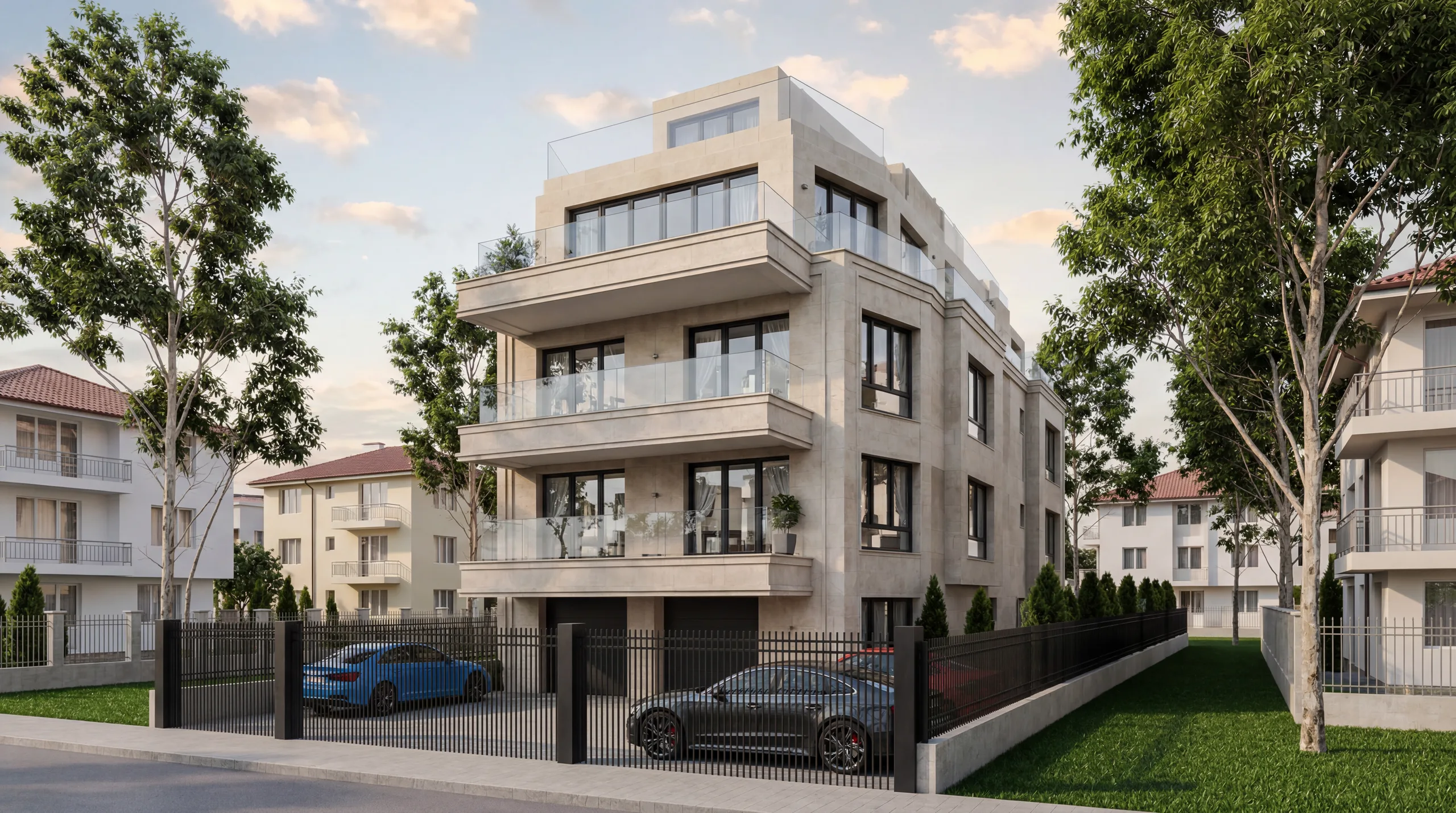
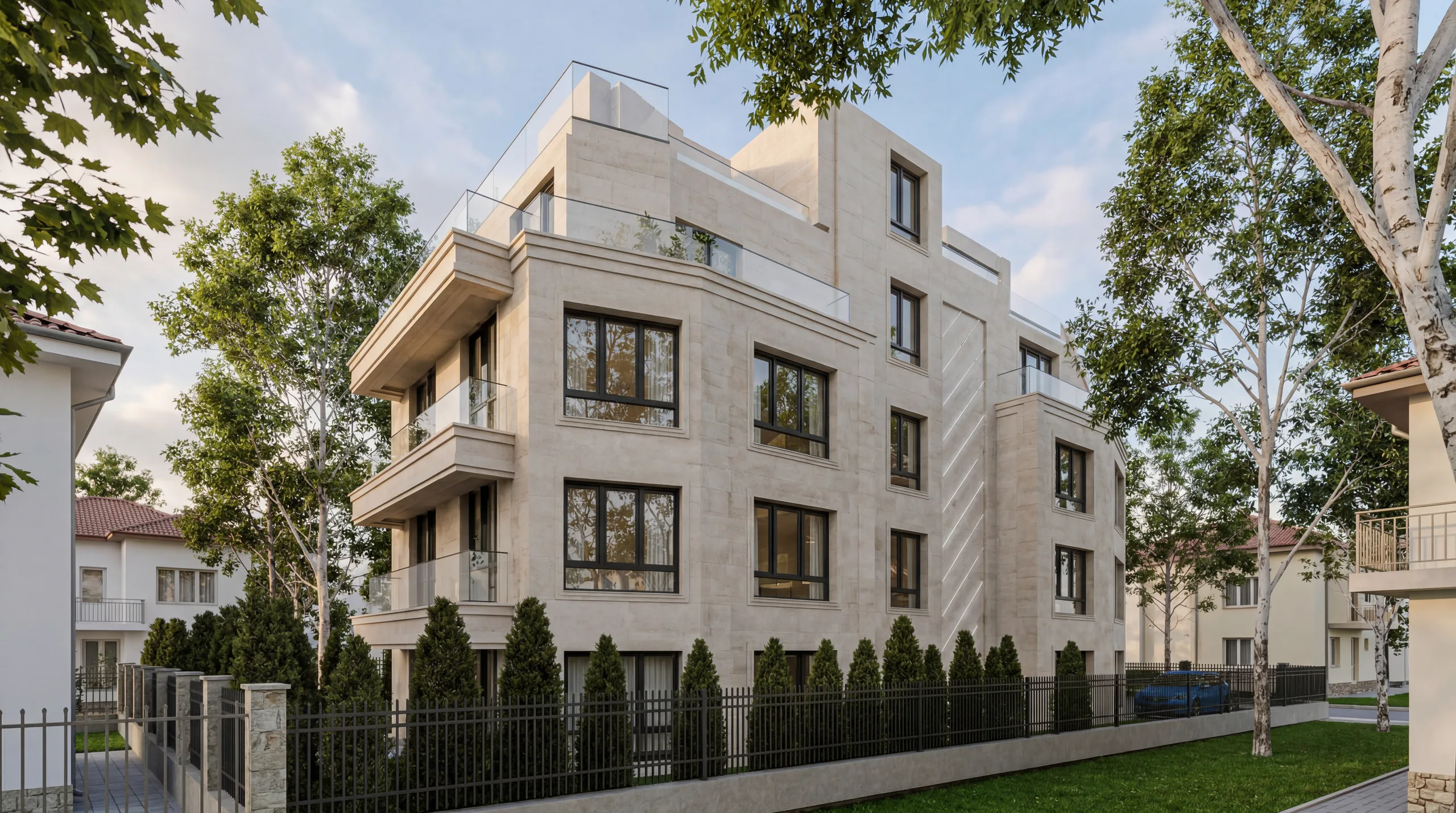
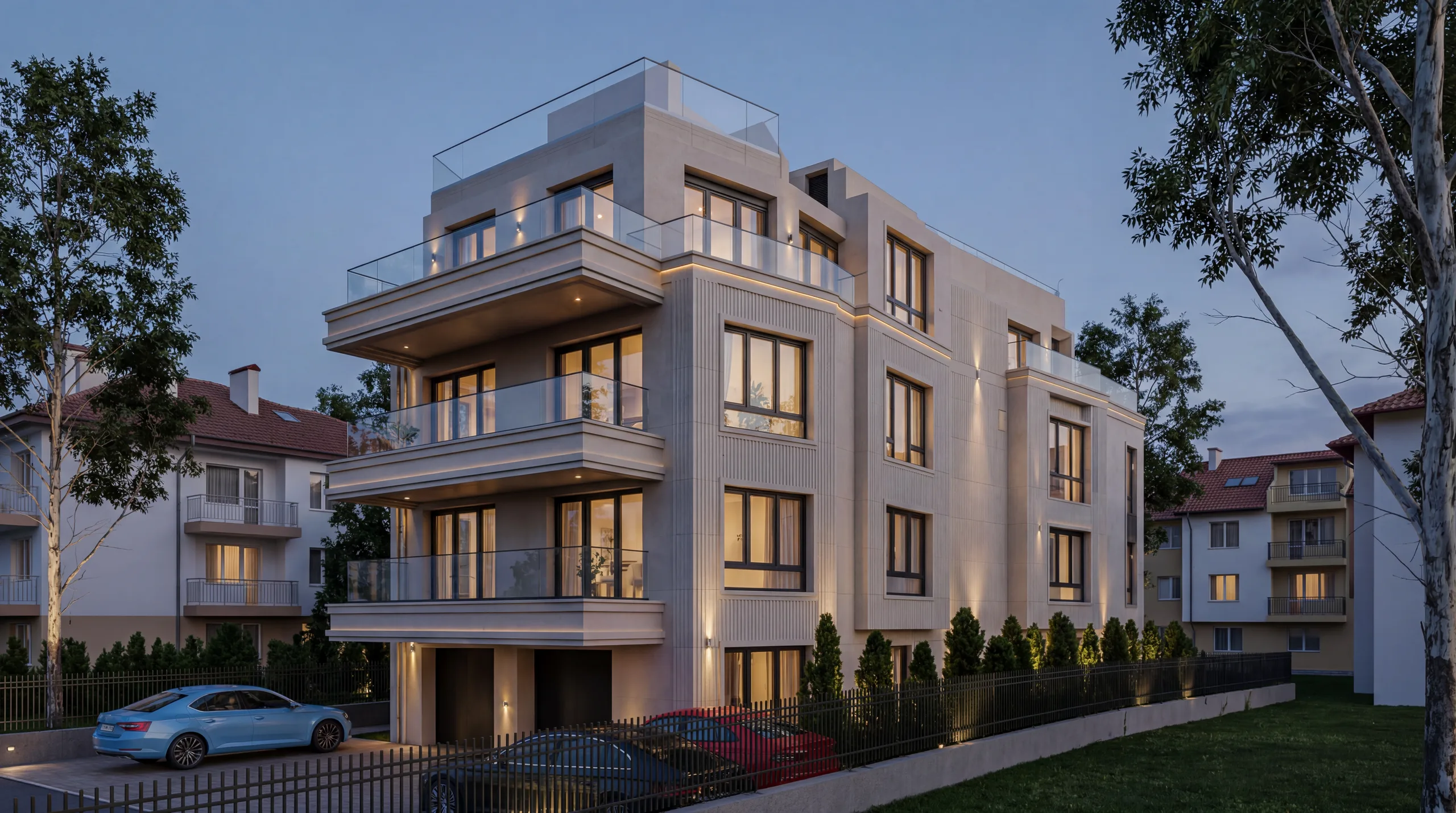
Menebria is designed with people in mind for whom the sea is a home, not just a summer escape. Six apartments across five levels in the quiet, green zone of Nesebar's new town, with controlled access, private garages and parking spaces, quality common areas, and functional layouts for genuine everyday life.
The project is in preparation. If year-round life by the coast is your goal, register your interest — we would be glad to tell you more.