A seaside apartment designed without attention to light, orientation, and terraces is a missed opportunity. The sea itself is not enough — the way the building opens or closes its homes towards it is decisive. Terraces and sea light are not bonus features; they are an architectural necessity.
When considering a coastal home, it is worth understanding what determines the quality of light and views — so you can evaluate projects with a more informed eye.
The role of the terrace in coastal living
A terrace in a seaside home is not an add-on to the living room — it is an extension of it. On a fine day, and on the Black Sea coast there are many fine days, the terrace is where you have breakfast, read, work remotely, or simply sit with a coffee and watch the sea.
A good terrace is spacious, sheltered from the wind where needed, and oriented to catch light during the hours when you will actually use it. A small, narrow terrace that barely fits two chairs is technically present, but practically useless.
Natural light and large windows
Sea light is qualitatively different from the light in an urban property. It reflects off the water, comes from a more open horizon, and illuminates the home in a different way at different hours of the day. To make the most of it you need windows with a larger surface area, unobstructed by structural elements, and the right orientation for the main rooms.
Tall windows and panoramic glazing are not only an aesthetic choice — they directly affect the sense of space and the amount of daylight inside the home. In a well-designed seaside apartment the difference between morning and midday feels like a shift of season.
Orientation and views
The orientation of an apartment is perhaps the hardest thing to assess before purchase, but one of the most important. An apartment with its main rooms facing east catches the morning light; facing west it gets the afternoon sun and sunsets; facing south it has light almost all day. The orientation towards the sea adds an additional dimension.
It is worth asking specifically at a viewing: which direction does the sun rise relative to the terrace? When is it in shade? Does the view open towards the sea or towards the neighbouring building? The answers to those questions paint a more honest picture than marketing visualisations.
Natural materials that hold up at the coast
A coastal climate is demanding. Salt, moisture, and wind wear down facade surfaces, joinery, and terraces faster than in an urban setting. That is precisely why material choices for a seaside building are not merely aesthetic, but technical and long-term.
Natural materials, properly treated and maintained, handle coastal conditions better and develop character over time rather than deteriorating. Good joinery, a durable facade, and quality terrace surfaces are an investment that pays back in reduced maintenance and better preservation of value.
The connection between home and nature
A seaside home where you can only glimpse the sea by leaning over the balcony is a wasted advantage. A well-designed home maintains a visual and physical connection with nature: the sea or the horizon is visible from the living room, the terrace is a real one, and the greenery of the grounds is in view from the windows.
That connection shapes the psychological sense of space and calm. A home facing the sea should feel like a home facing the sea — not merely carry that address.
The terraces at Menebria
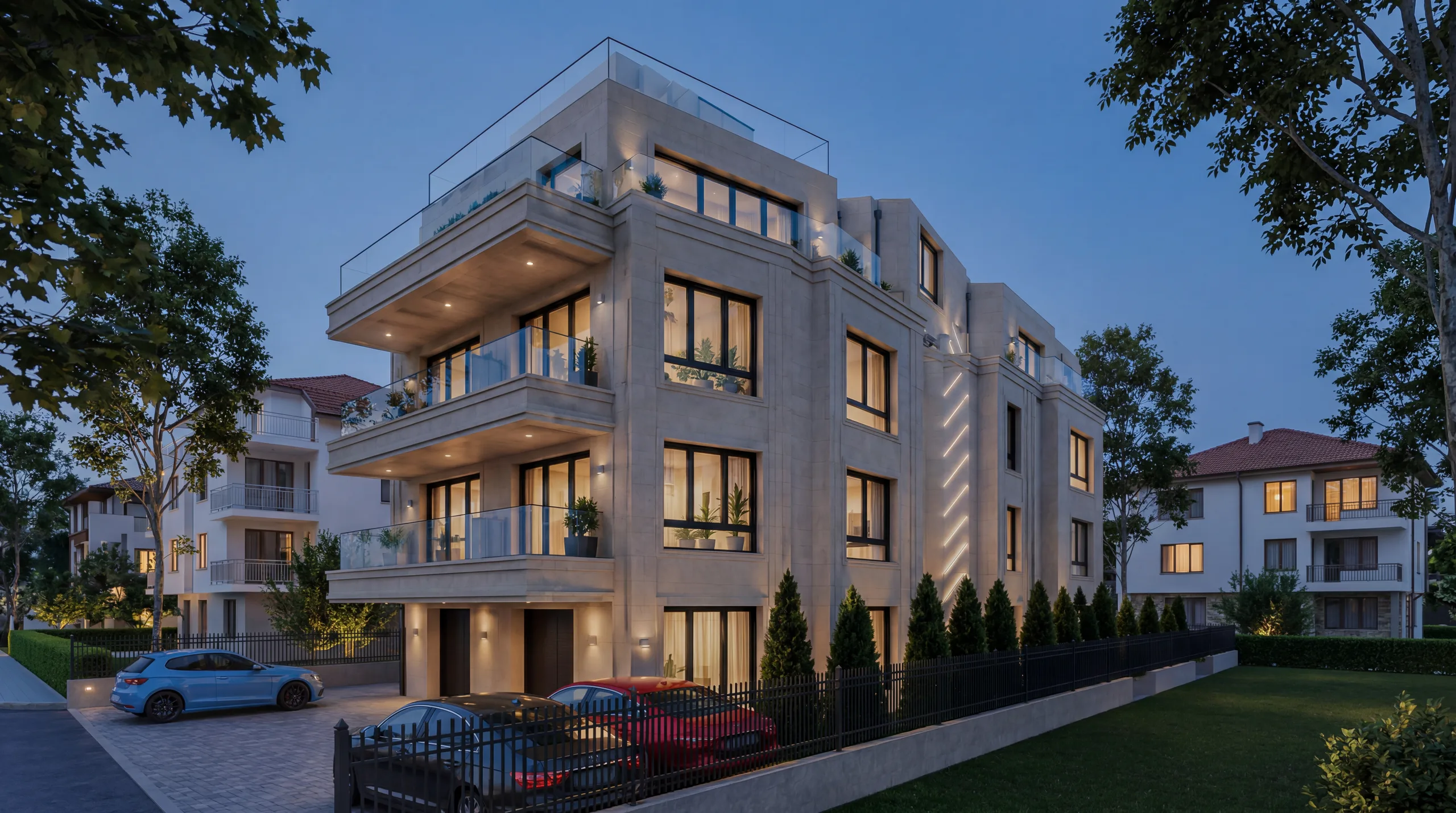
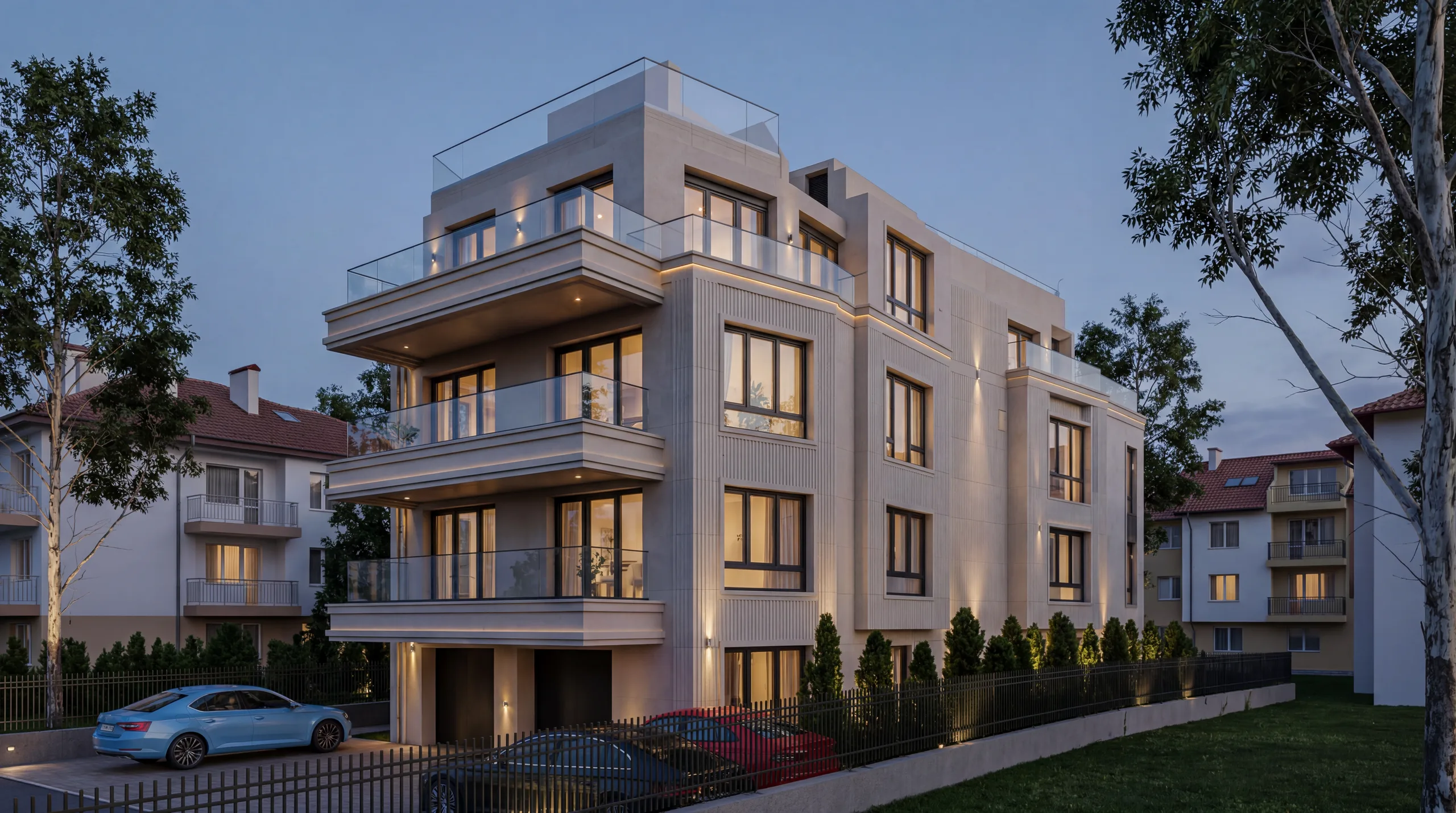
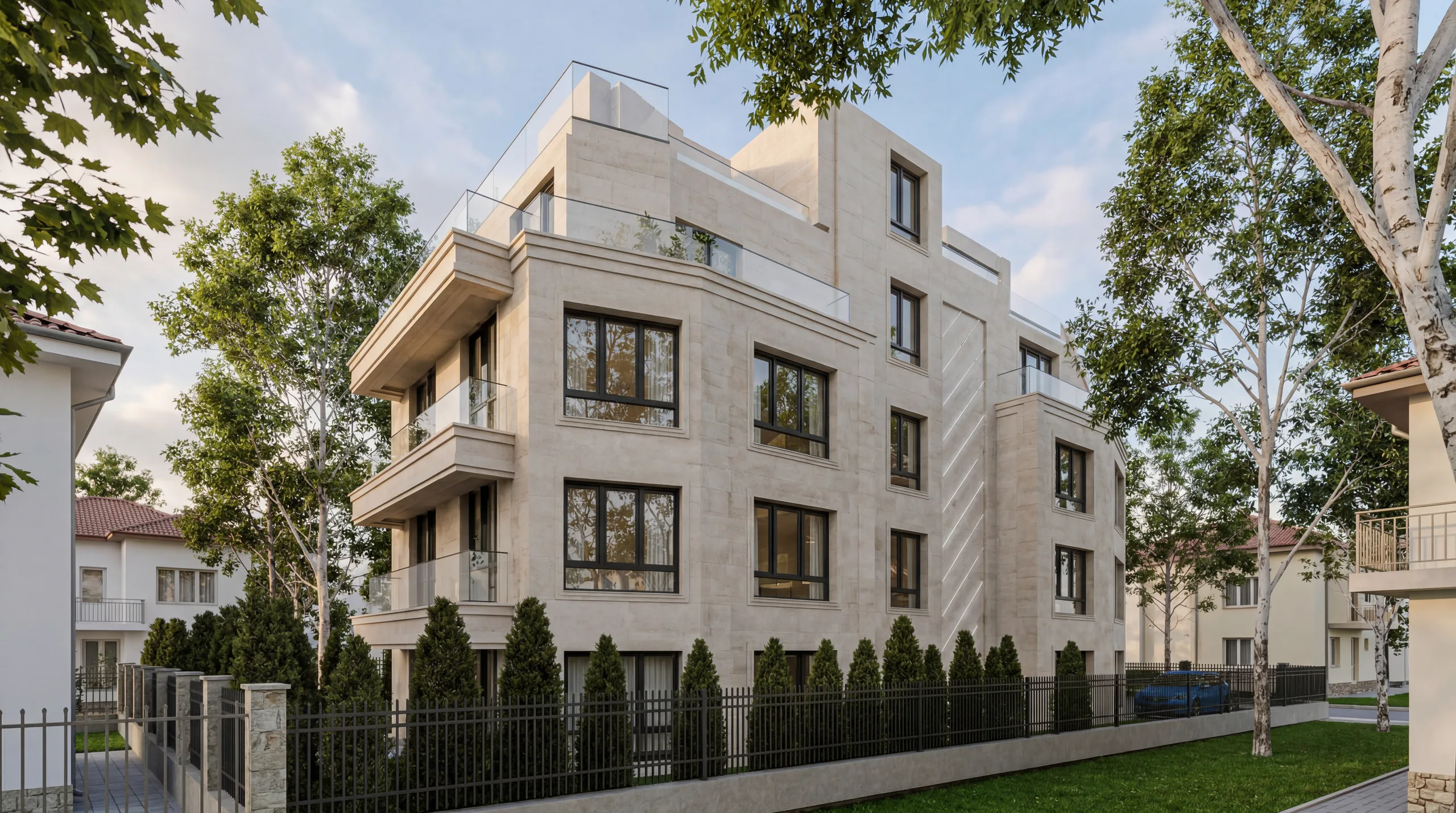
Menebria is designed with these principles in mind: panoramic terraces, tall windows, abundant natural light, and natural materials chosen for a coastal setting. The six apartments across five levels are laid out with functional plans and elegant lines, in a building that treats the sea as a main participant rather than a bonus.
The project is still in preparation. If the architectural concept for a seaside home interests you, register your interest and we will be in touch with details.