
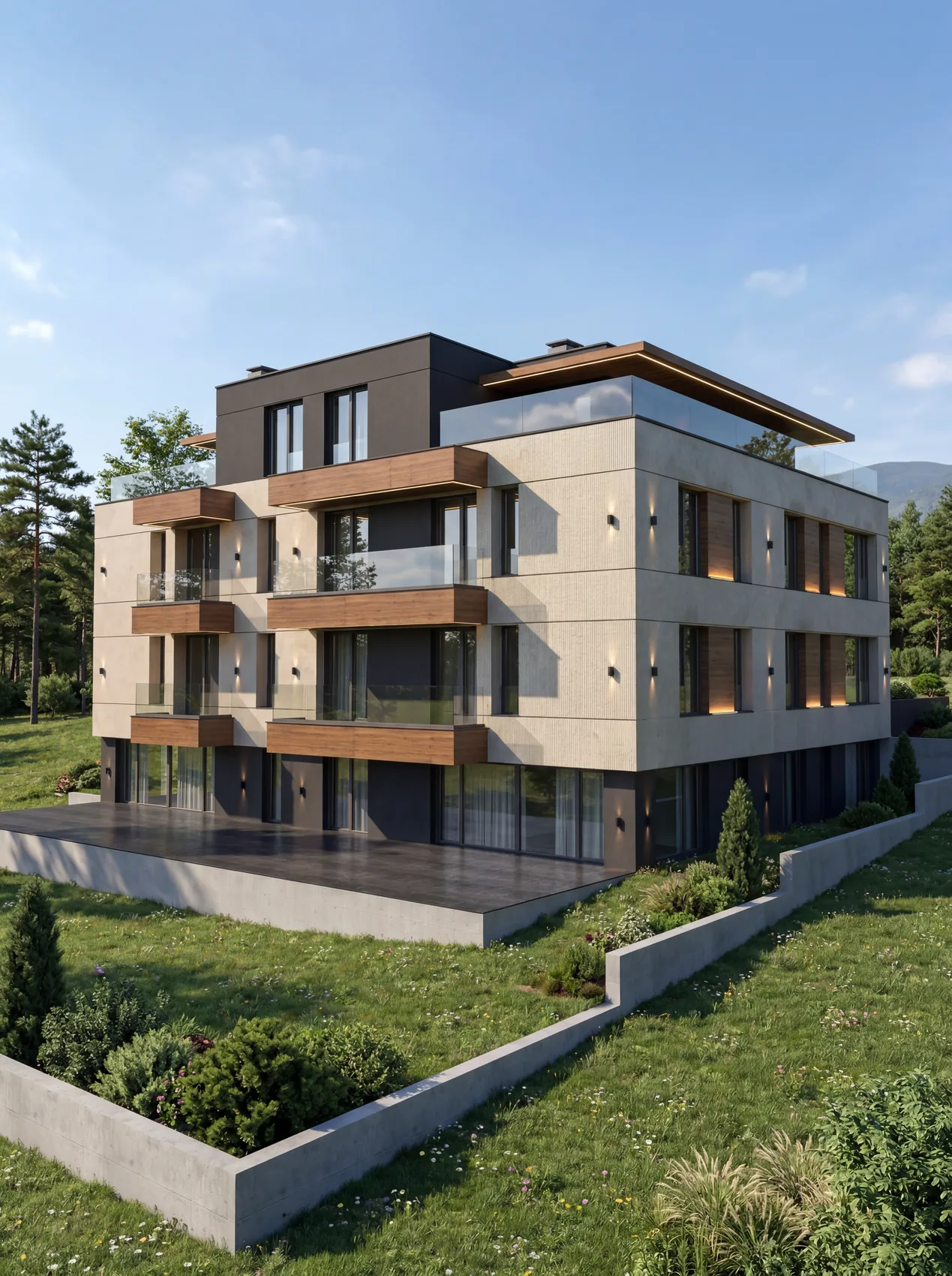
Quiet at home is one of those things you notice immediately after moving in, but it is rarely judged correctly before buying. It does not come down to one element, but to the combination of walls, joinery and floor structure.
In this article we look at what genuinely determines sound insulation in new construction, and what to ask while you still have a choice.
The role of the walls
The material and thickness of the walls are the first line of defence against noise from outside and from neighbouring rooms. Ceramic blocks, such as Wienerberger Porotherm, have a structure that naturally holds sound back better than lighter materials.
The density and quality of the masonry, not just its thickness, determine how effectively a wall stops sound travelling between rooms and apartments.
Joinery and double glazing
Windows are often the weakest link for sound insulation, because glass lets sound through more easily than a solid wall. Quality aluminium joinery with energy-efficient double glazing significantly reduces outside noise — from the street, neighbours or traffic.
Beyond the glass itself, the window seal matters too — well-made and properly fitted joinery closes tightly, without gaps that let sound through easily.
Floor structure
Noise also travels vertically, between floors. The floor structure — the screed, the insulating layer beneath it and the slabs themselves — determines how much of the footsteps and everyday sounds from the apartment below you can hear.
A well-designed floor system reduces the transmission of impact noise, which is especially noticeable in buildings with more than one floor and different owners above and below you.
What to ask on a viewing
Ask specifically about the masonry material, the specification of the joinery and glazing, and whether there is an insulating layer within the floor structure between levels. These three questions cover the main factors behind sound insulation.
If possible, visit a building at a similar construction stage to experience the structure in person, rather than relying solely on a specification on paper.
Why the combination of materials matters
No single element on its own guarantees quiet — the real difference comes from dense masonry, quality joinery and a well-thought-out floor structure working together as one whole.
When these three factors are built in correctly from the start of construction, the result is a home where quiet is a natural part of daily life, not an exception.


